

Your codebase is your most valuable asset — and your biggest blind spot.
Engineering teams lose weeks ramping up new developers, planning around undocumented dependencies, and debugging cascading failures they didn't see coming. Code Lexica turns your repositories into a living knowledge base that the entire team — and your AI tools — can rely on.
Five report types. One complete picture.
Every report is generated from deep analysis of your actual codebase — not templates, not guesses. Evidence-backed intelligence with traceability to source.
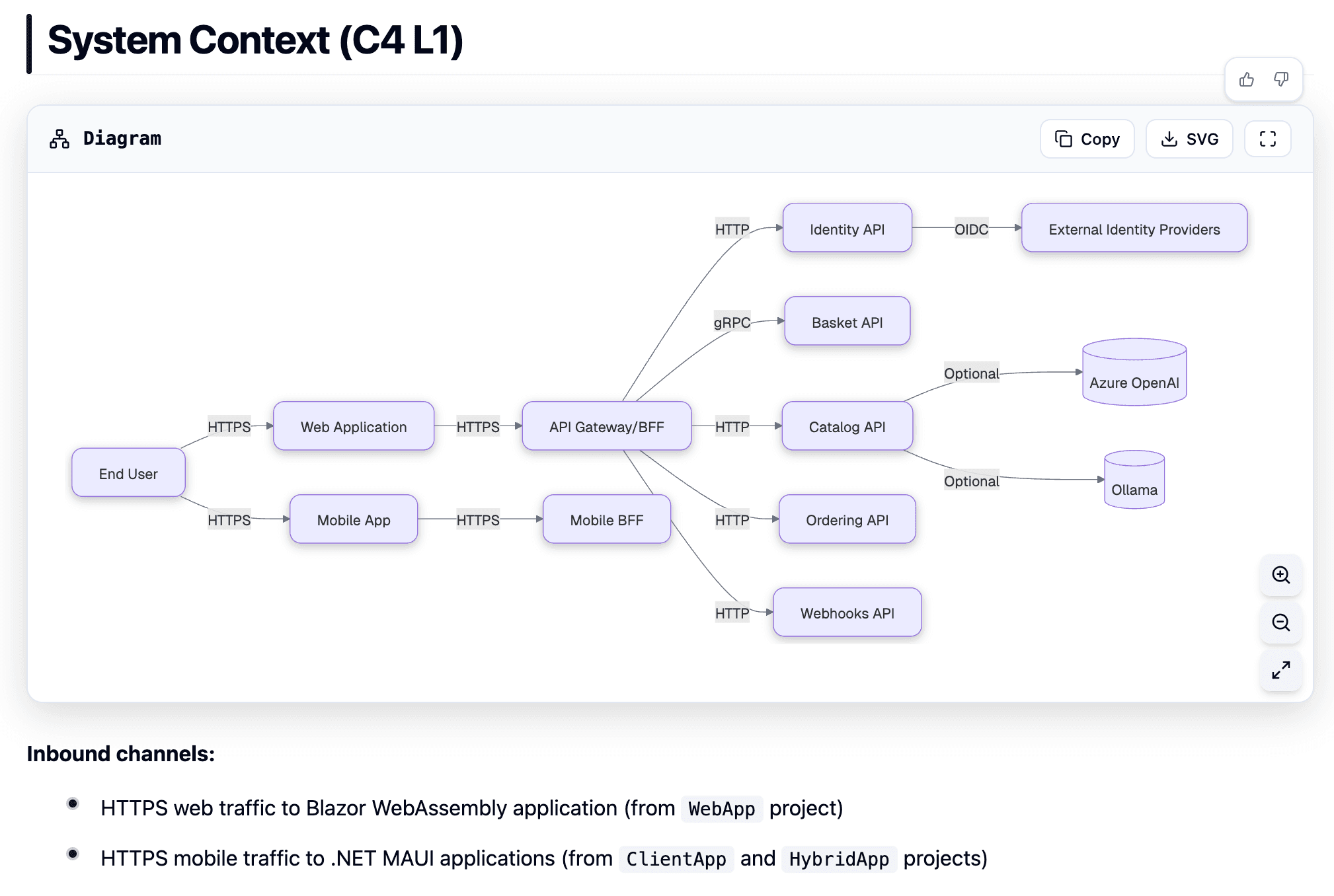
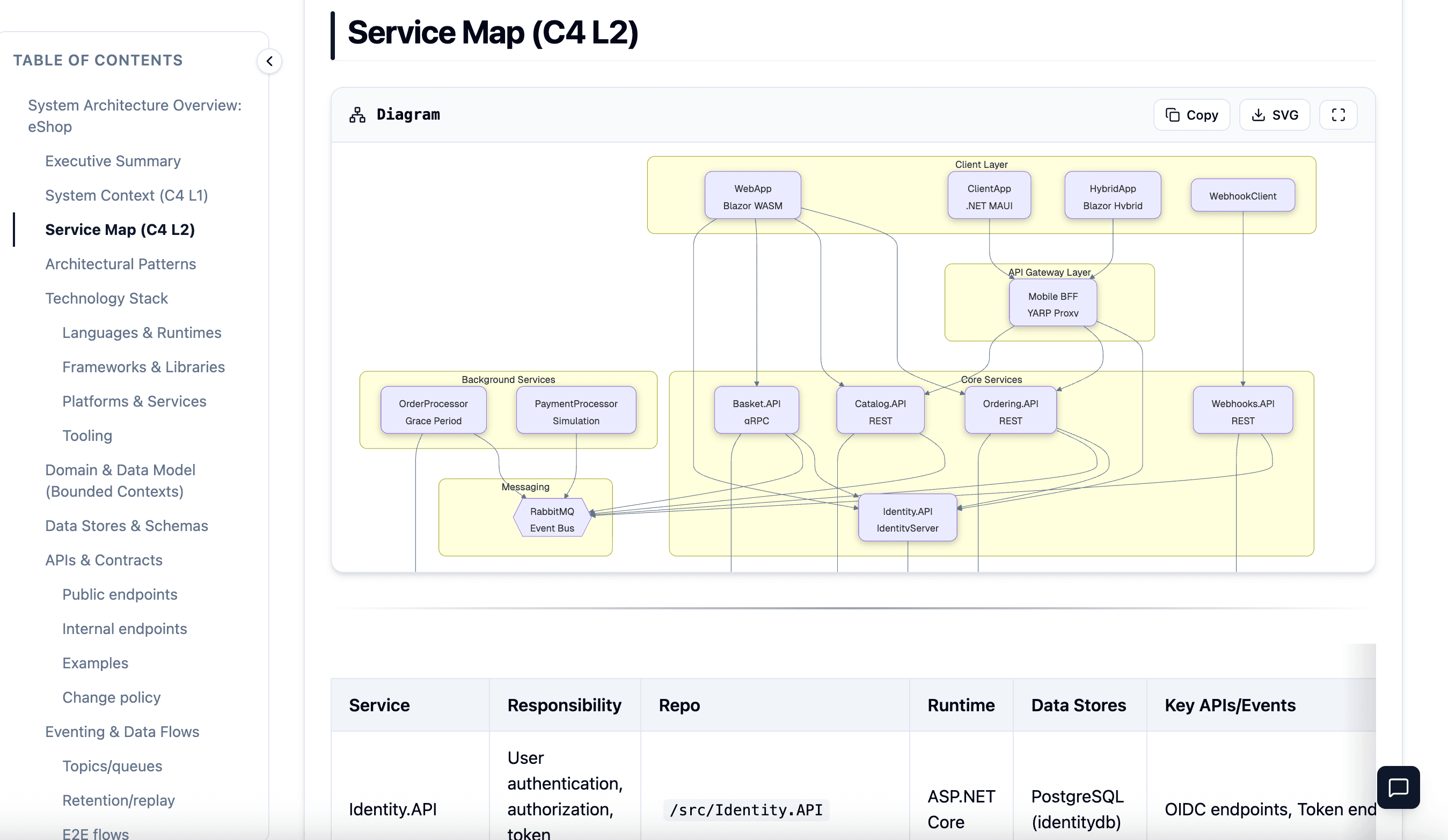
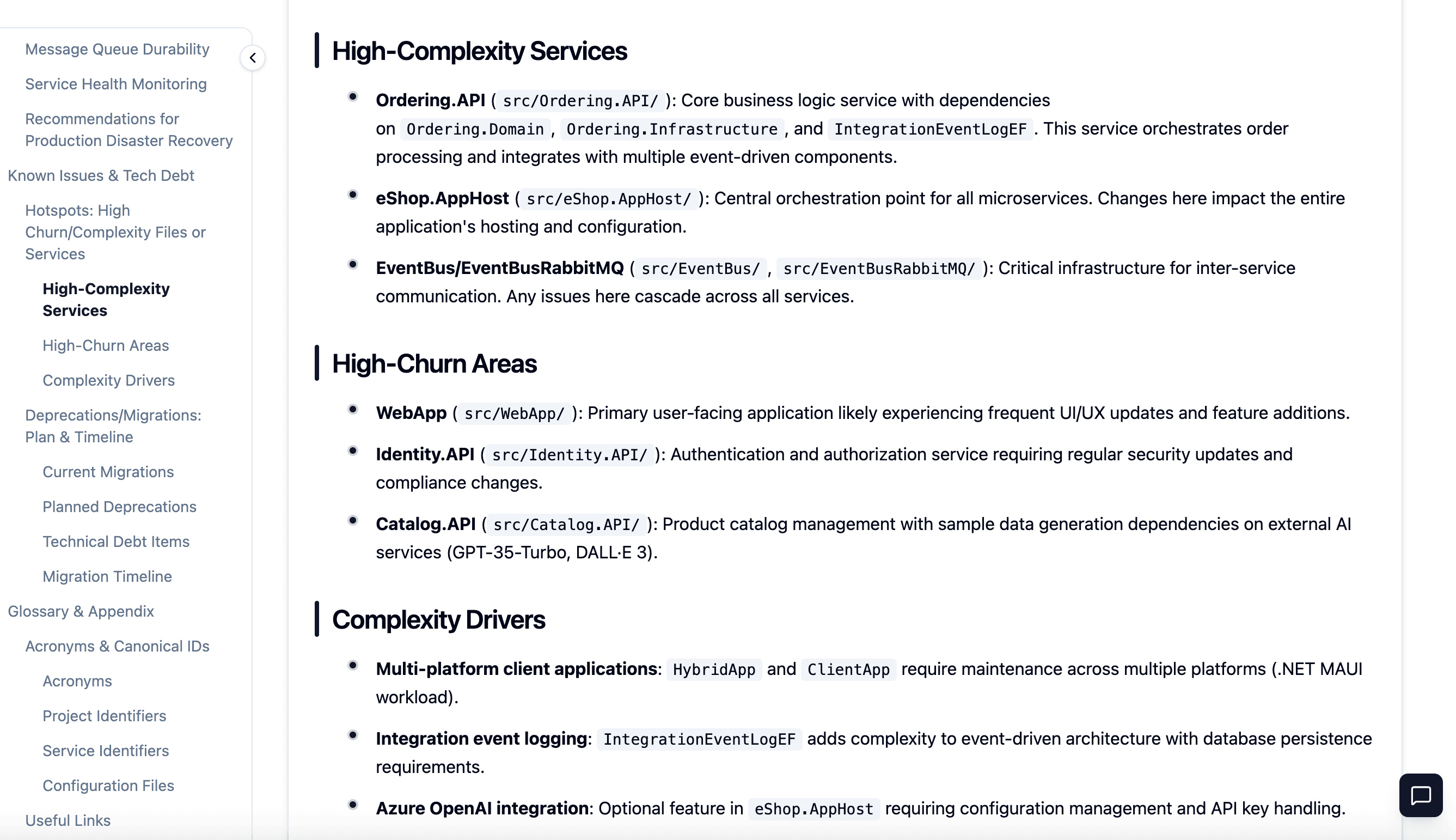
System Overview
A comprehensive architectural map of your codebase that reveals how all components connect and interact.
What's included
- Architecture Diagram — visual representation of major components
- Module Inventory — complete listing of packages and responsibilities
- Dependency Map — internal and external dependency analysis
- Data Flow Overview — how data moves through the system
- Integration Points — external APIs, databases, third-party services
- Technology Stack Summary — languages, frameworks, infrastructure
“The OrderService module has 47 inbound dependencies, making it a critical path component that requires careful change management.”
Technical Assessment
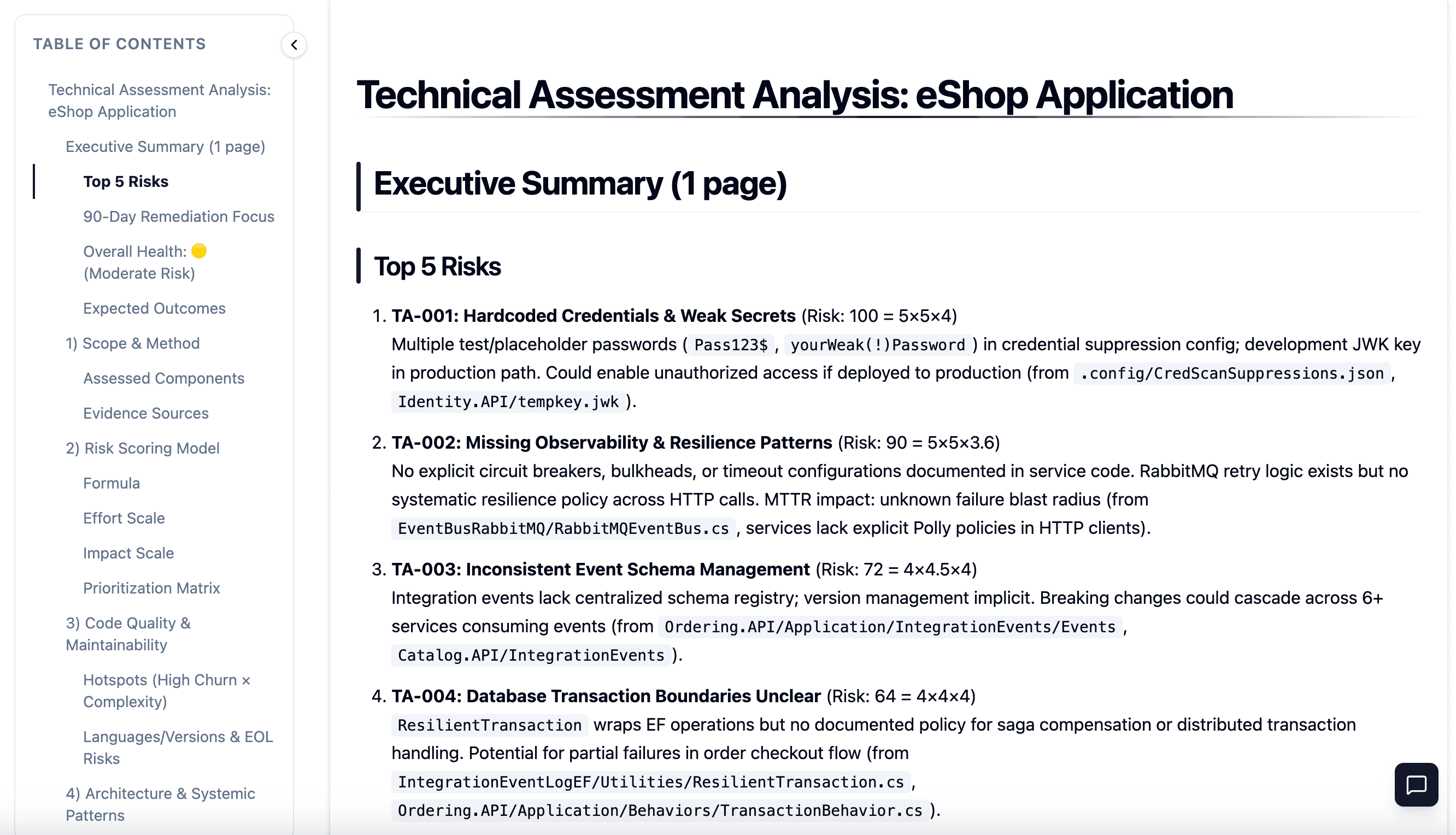
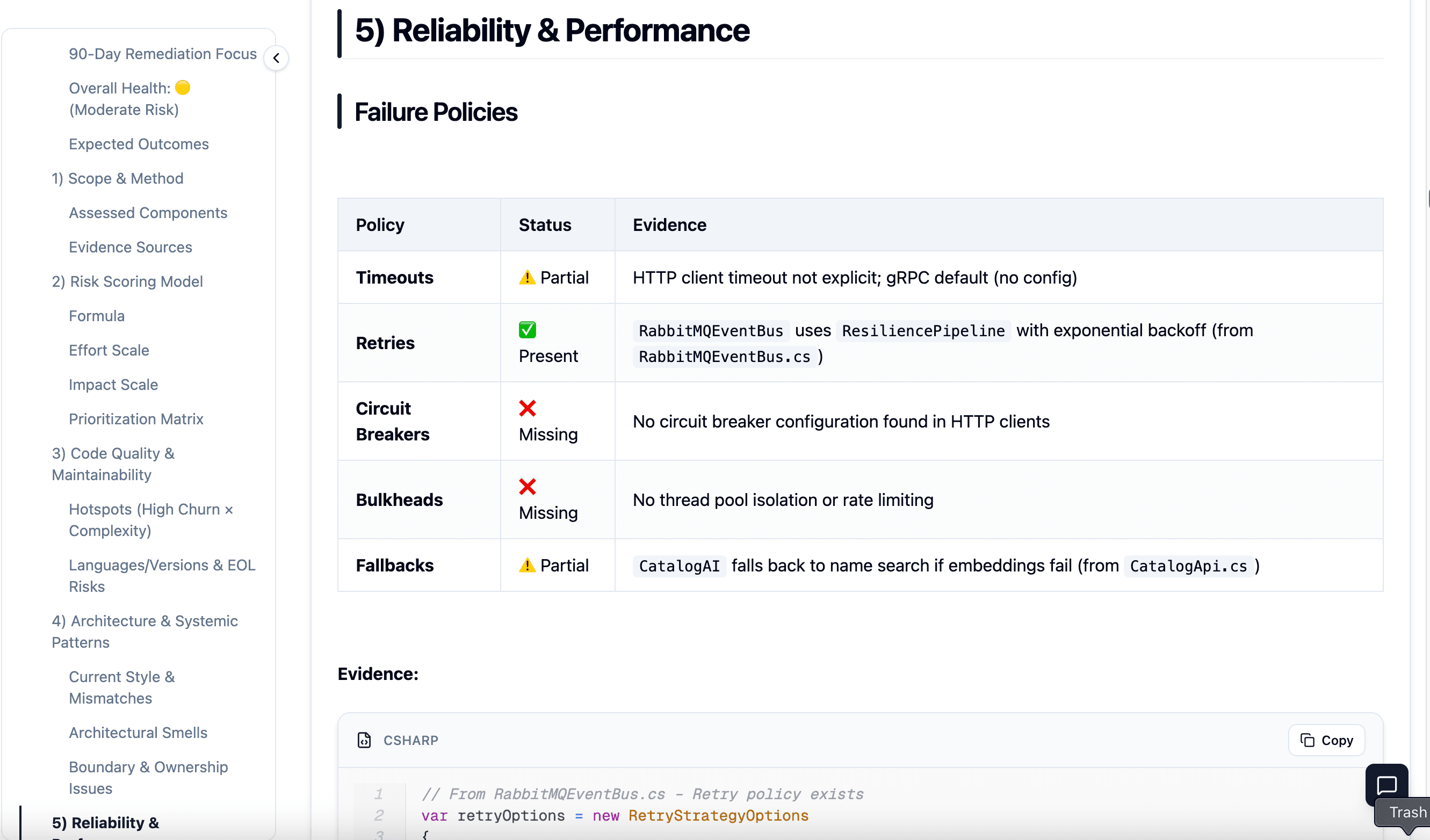
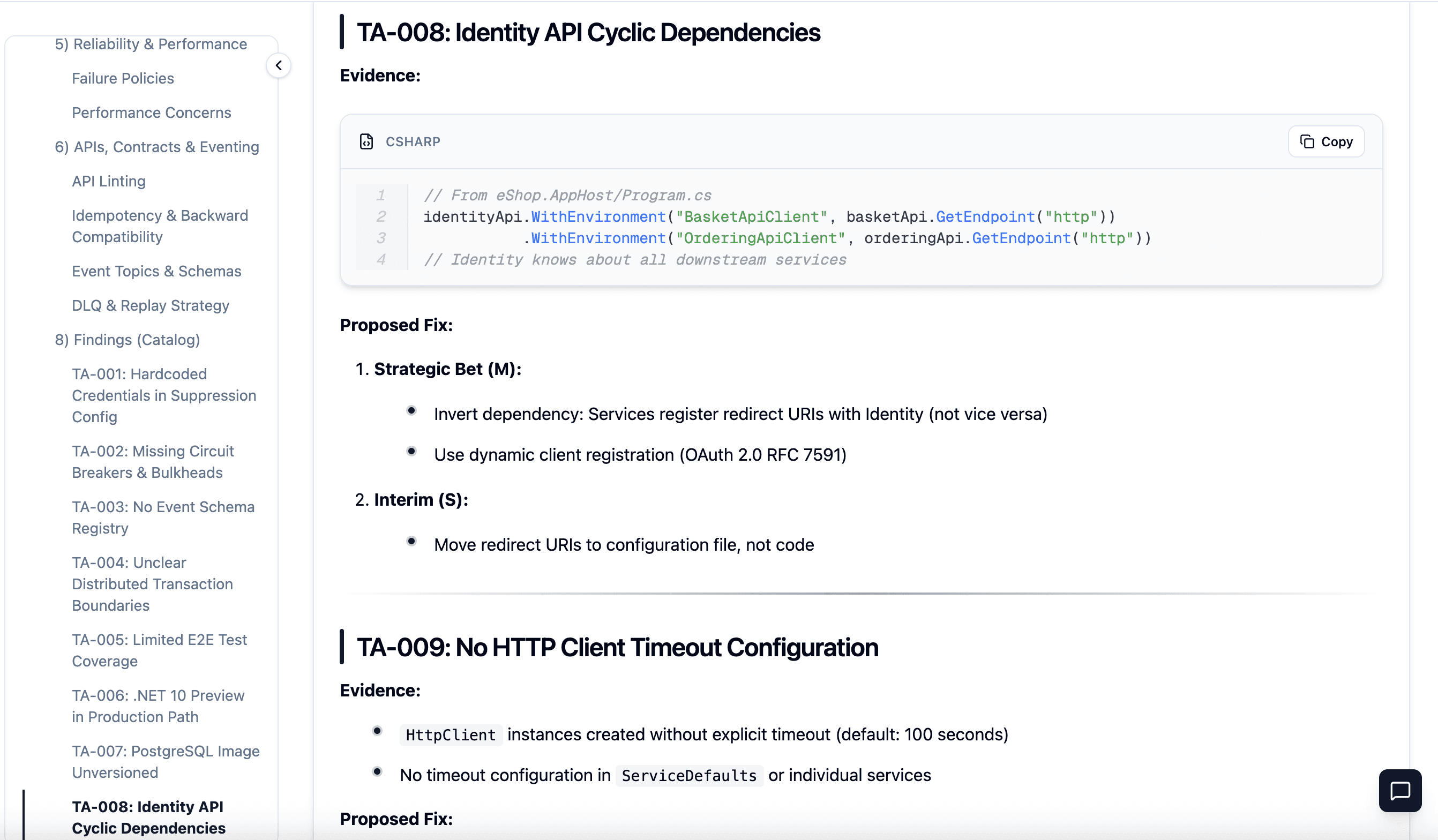
A health check of your codebase that identifies technical debt, security vulnerabilities, and quality issues with prioritized remediation paths.
What's included
- Code Quality Score — health rating by module and metric
- Technical Debt Inventory — issues ranked by severity and effort
- Security Vulnerability Scan — CVEs, insecure patterns, exposed secrets
- Dependency Health — outdated packages, license risks
- Performance Hotspots — complexity and efficiency concerns
- Remediation Roadmap — prioritized action plan with effort estimates
“Technical debt is concentrated in 3 modules that account for 67% of all bug fixes over the past year.”
User Journeys
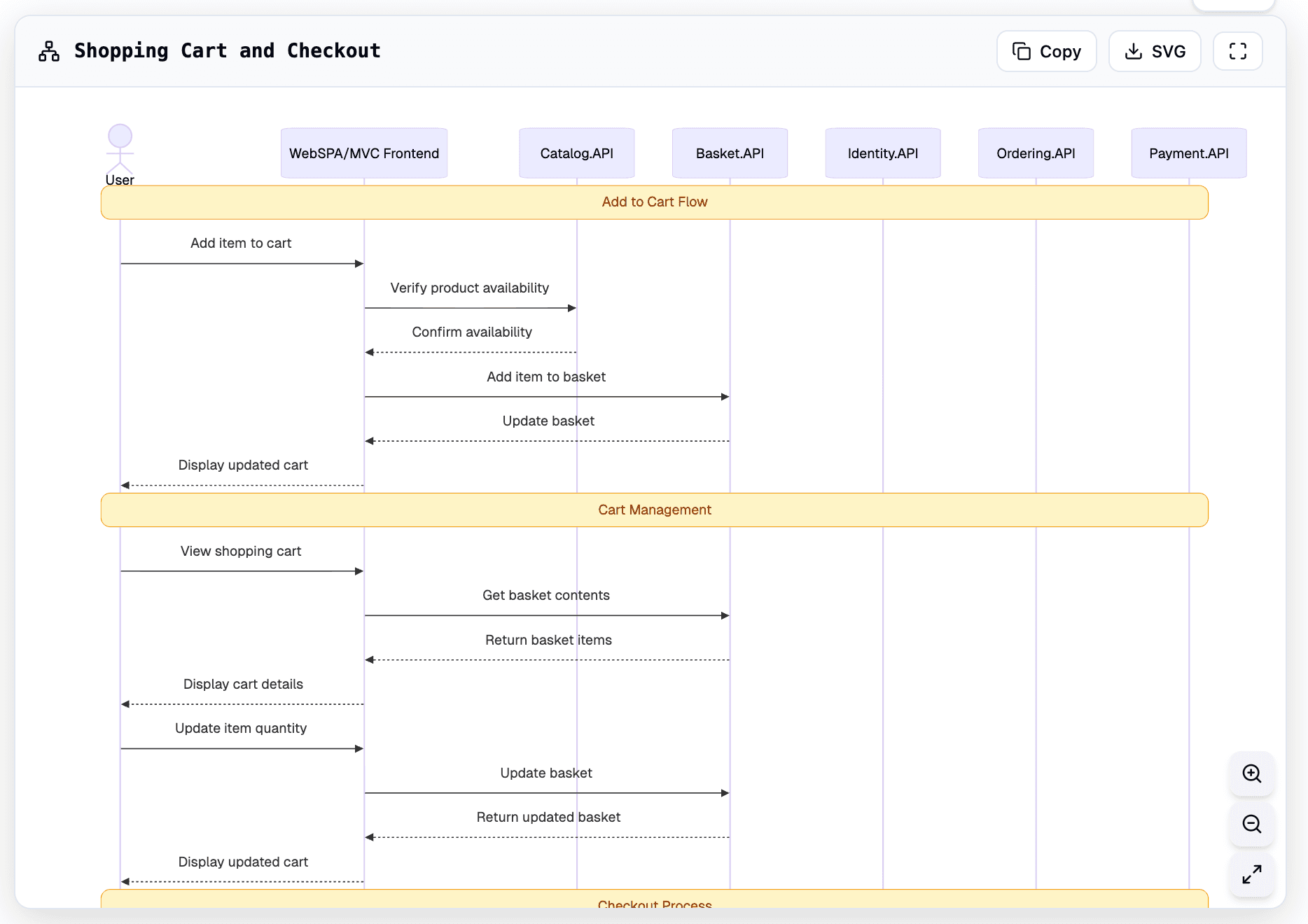
Map critical user flows to their underlying code paths — connecting product experiences to technical implementation.
What's included
- Journey Catalog — identified user flows with descriptions
- Flow Visualizations — steps from user action to system response
- Code Path Mapping — files, functions, and services each journey touches
- Critical Path Analysis — single points of failure
- Error Scenarios — what can go wrong and how the system handles it
“The checkout flow touches 14 services and 3 external APIs; failure in the InventoryService causes silent cart abandonment.”
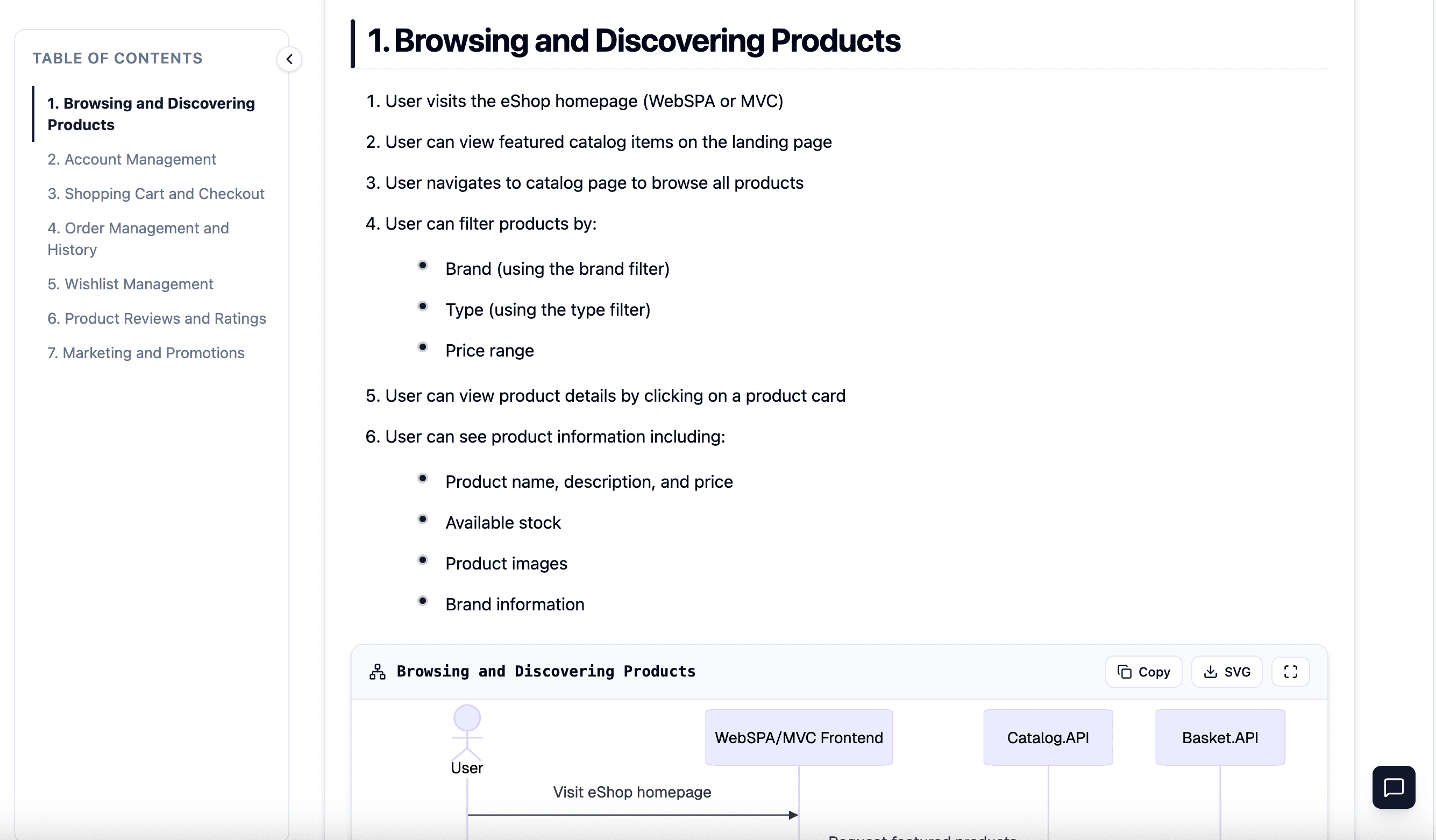
Developer Onboarding
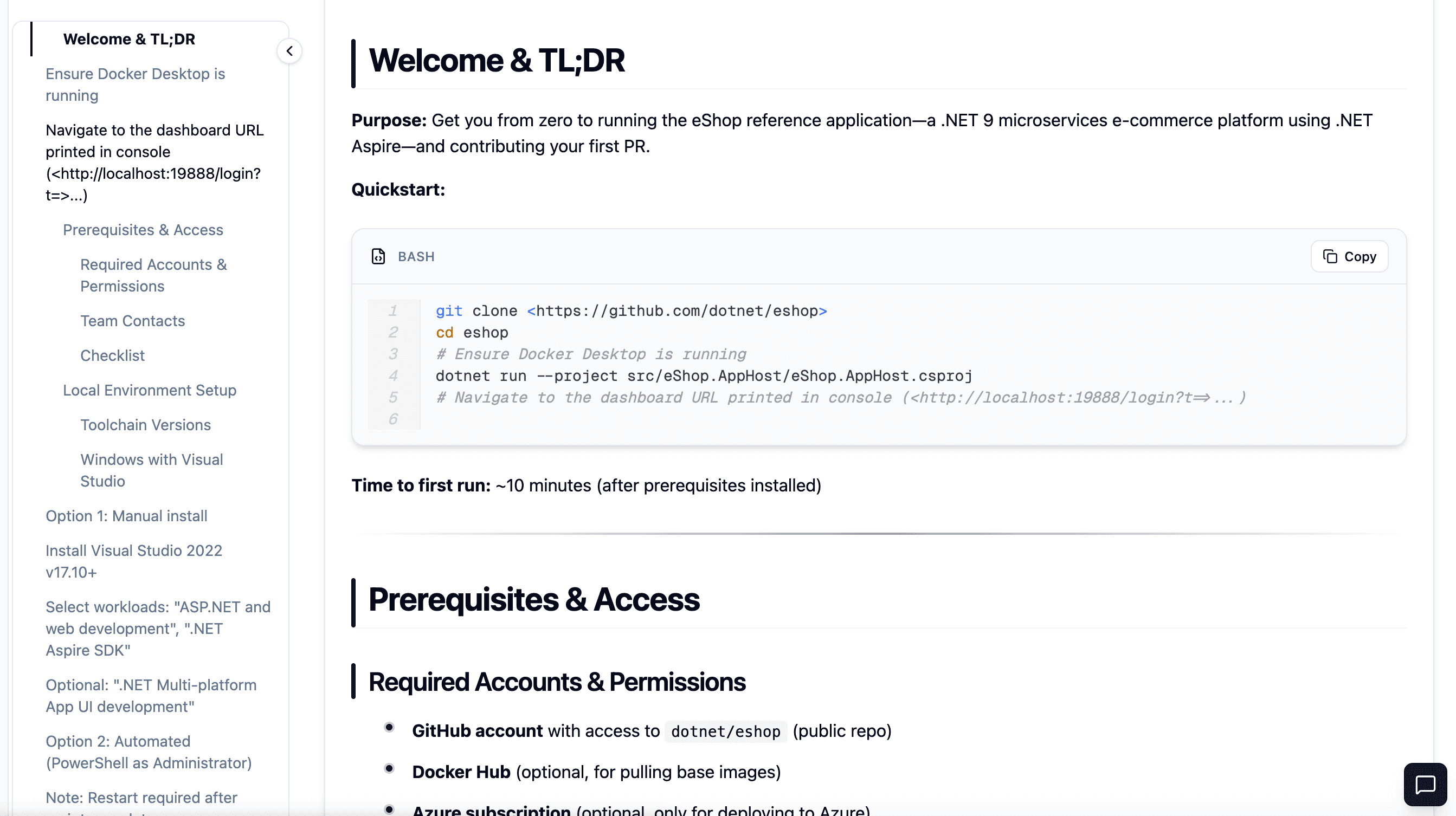
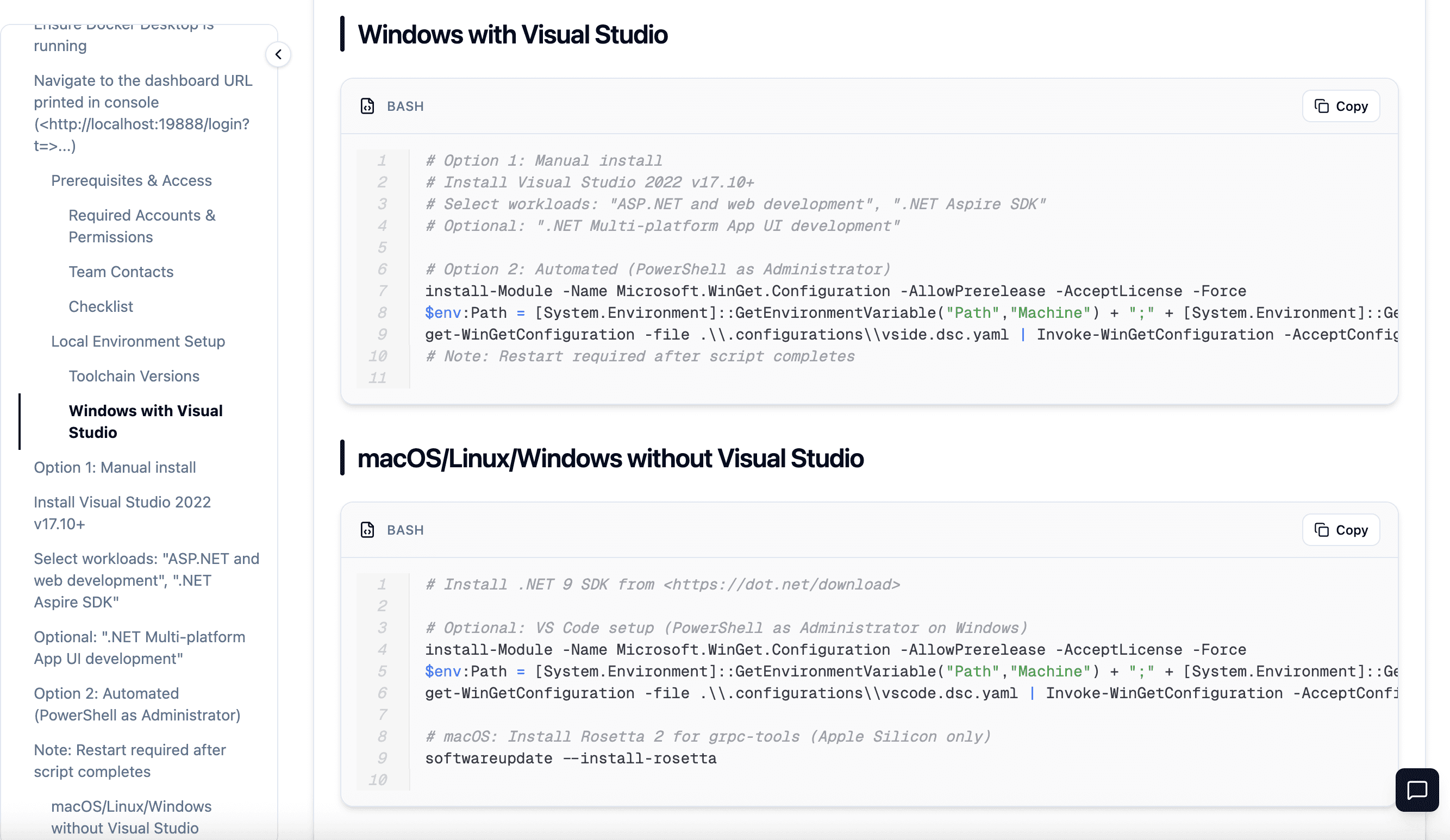
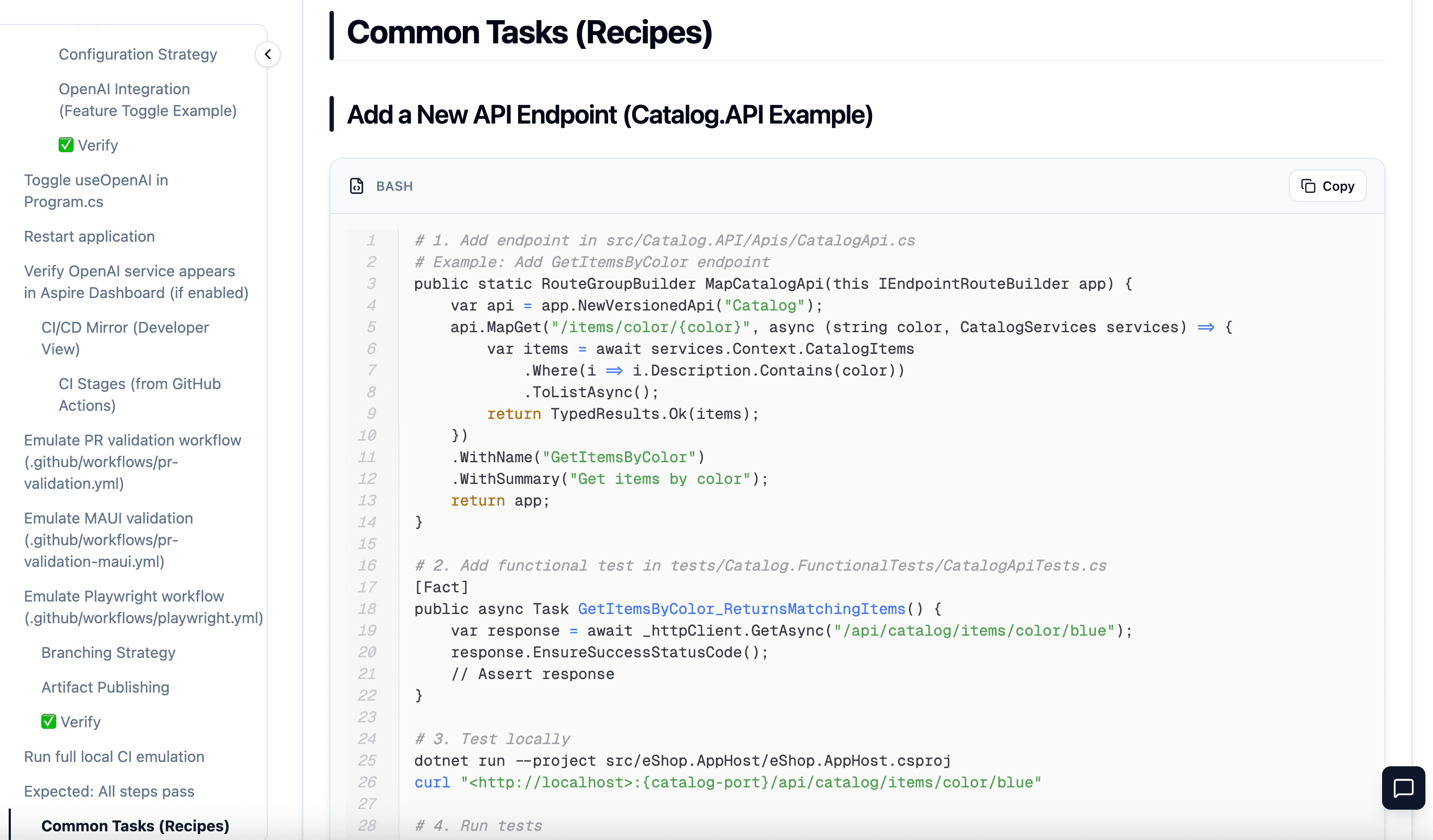
A structured learning path that transforms new hires into productive contributors by guiding them through the codebase systematically.
What's included
- Getting Started Guide — environment setup and first build
- Codebase Tour — guided walkthrough of key directories
- Core Concepts Glossary — domain terms and naming conventions
- Key Workflows — step-by-step common development tasks
- Architecture Primer — simplified system overview for newcomers
- Starter Tasks — guided walkthrough of initial tickets
“The src/core/ directory contains the domain logic — start here to understand business rules before exploring API layers.”
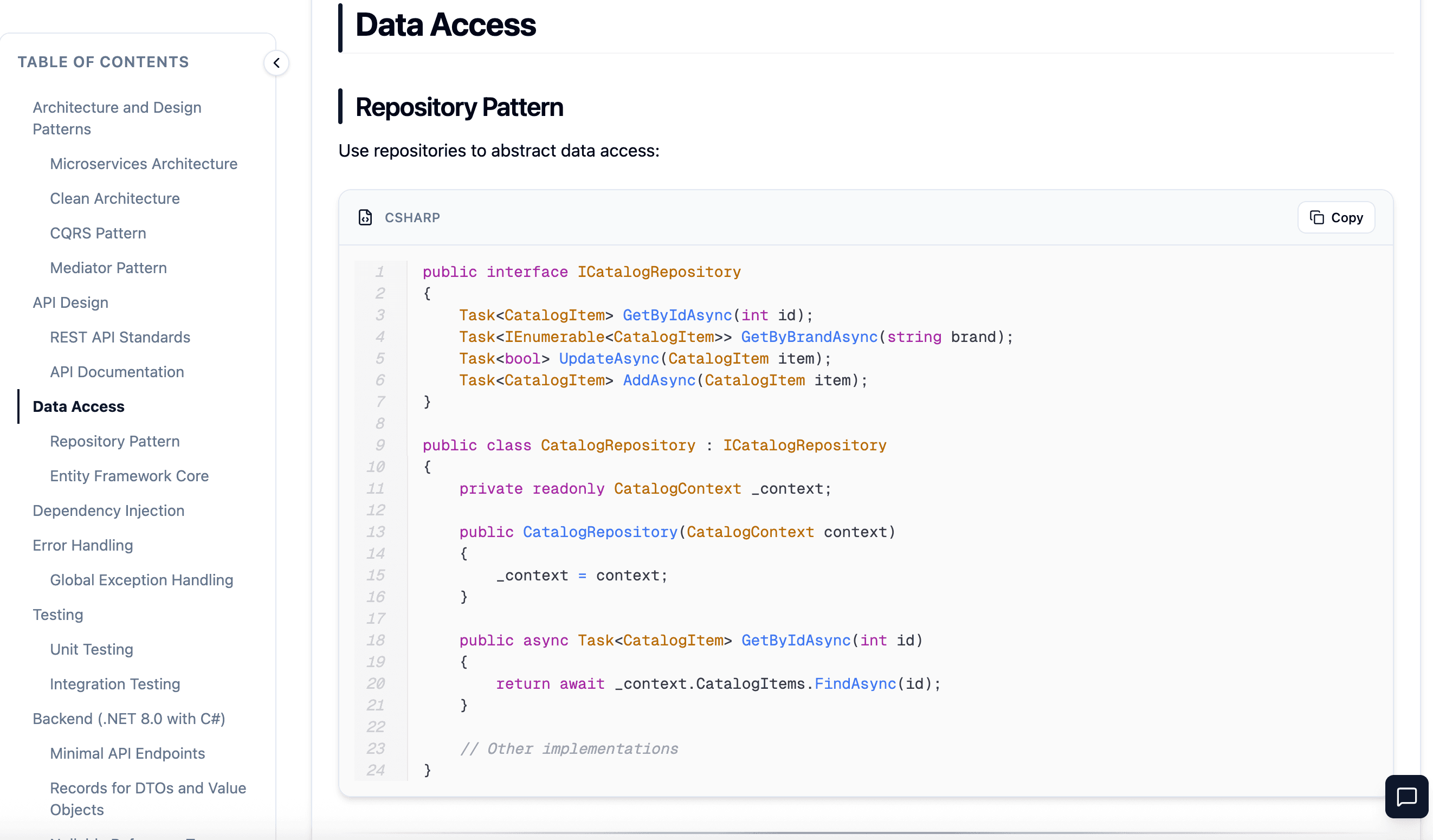
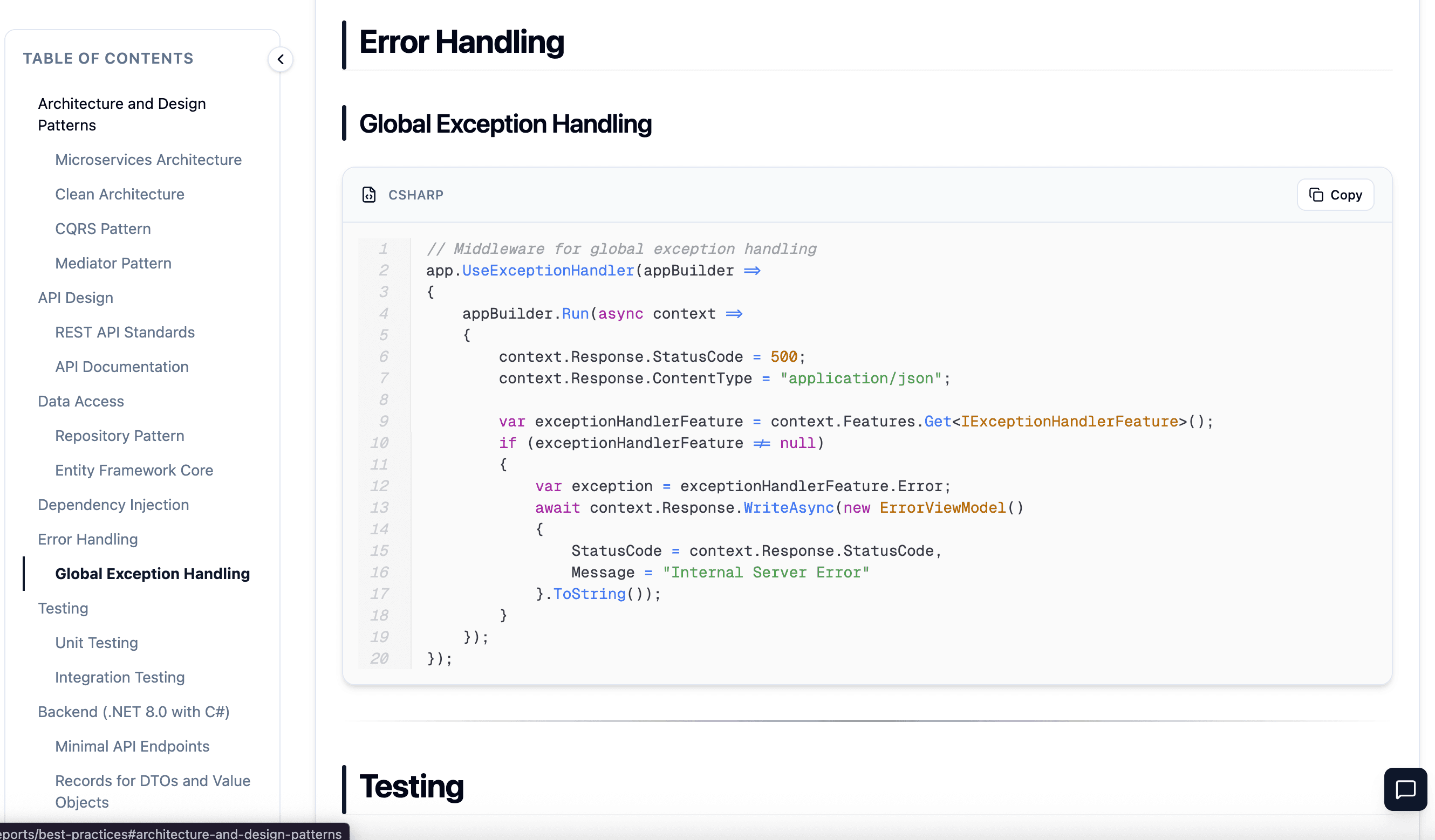
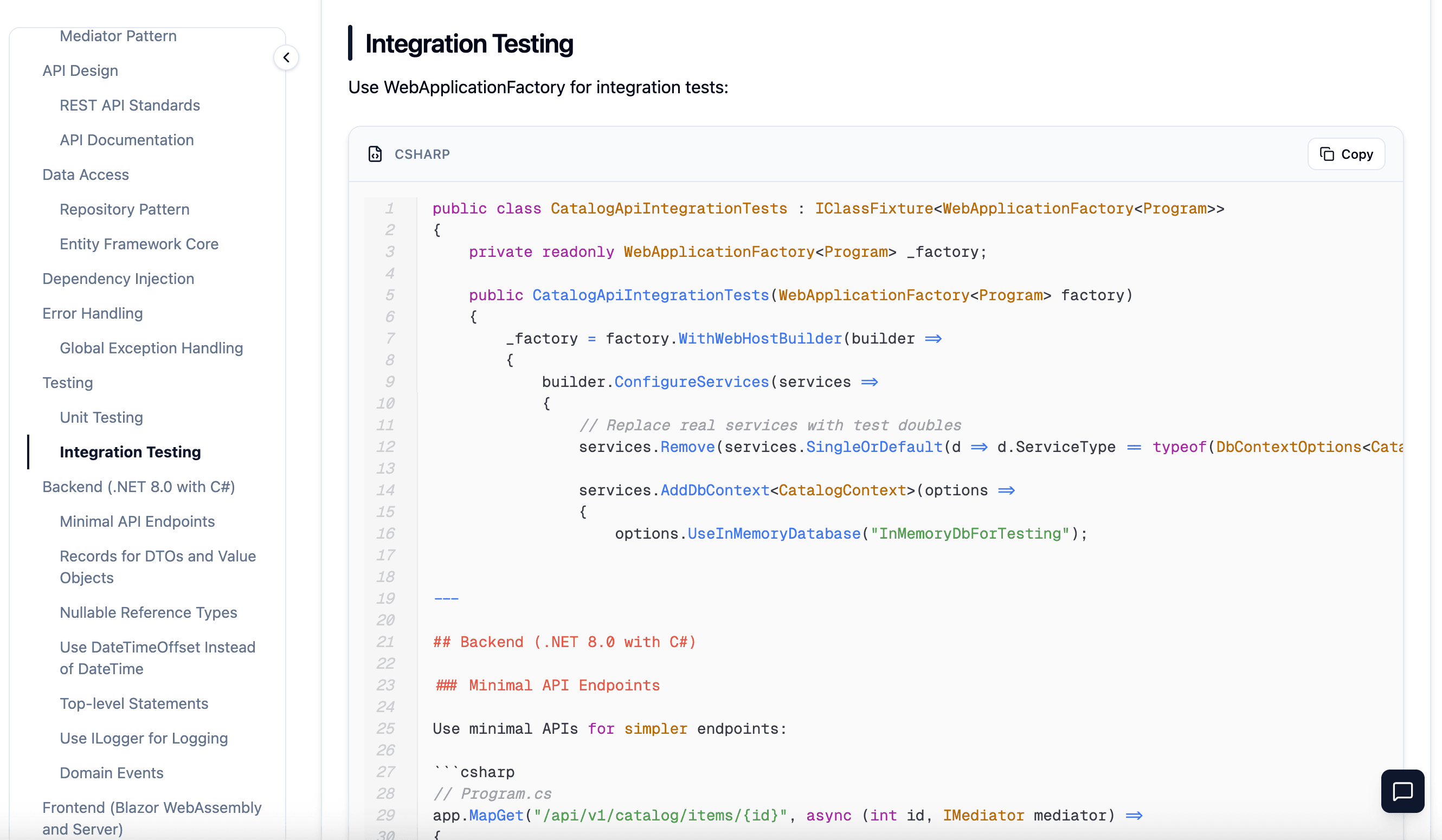
Best Practices
Analysis of your codebase against industry standards and internal conventions — highlighting where practices excel and where they diverge.
What's included
- Pattern Inventory — recurring patterns across the codebase
- Consistency Analysis — where multiple approaches solve the same problem
- Framework Usage Review — alignment with recommended practices
- Anti-Pattern Detection — common mistakes and problematic patterns
- Recommended Standards — suggested conventions based on analysis
- Refactoring Opportunities — where standardization helps most
“Error handling uses 4 different patterns — try-catch (42%), Result types (31%), callbacks (18%), silent failures (9%). Recommend consolidating on Result types.”
See what Code Lexica reveals about your codebase
Automated intelligence reports that would take weeks to produce manually.